
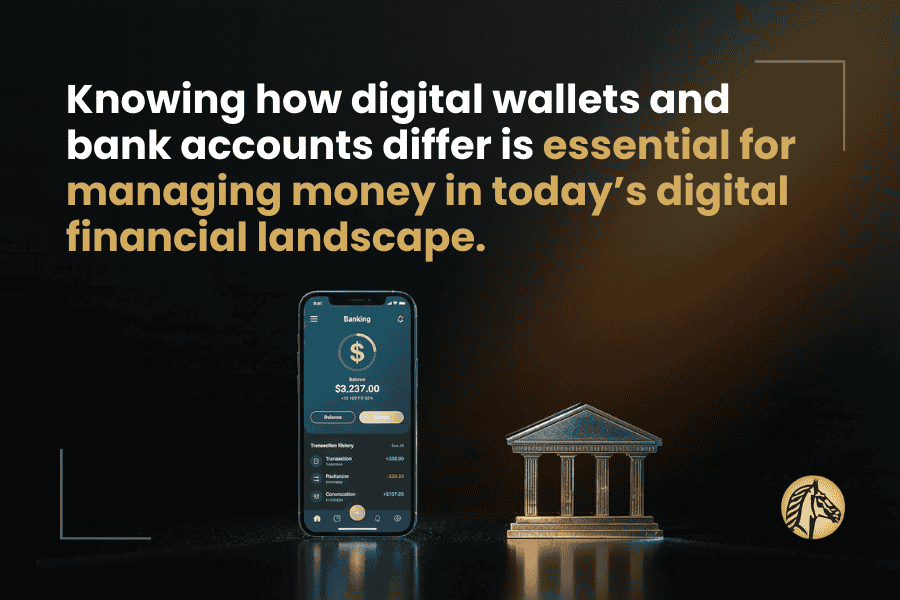
As financial activity becomes increasingly digital and cross-border, individuals and businesses are navigating a growing range of tools to manage money, complete online purchases, and access digital wallet apps within expanding mobile banking environments. The discussion around digital wallet vs. bank account has become central to modern financial management, as digital wallets, including services such as Apple Pay and Google Pay, and traditional banking systems now coexist within everyday financial activity.
While both facilitate transactions and access to money, they operate within different regulatory, operational, and risk frameworks. Understanding how mobile banking and bank account structures differ, and how digital wallet vs traditional banking models interact, is essential for managing funds and payment activity across jurisdictions. Institutions such as Suisse Bank, as a regulated financial institution, assess these tools not as interchangeable products or sources of specific advice, but as infrastructure components that must align with governance, compliance, and operational discipline.
Bank Account Basics
A bank account provides a regulated structure to store money, transfer funds, and access essential banking services. Common account types include savings accounts and checking accounts, each supporting different financial needs. Savings accounts allow money to grow and earn interest, while checking accounts facilitate daily transactions such as bill payments, pay bills, and routine transfers.
A traditional bank account also allows customers to deposit checks, manage direct deposits, access loans, and hold larger balances securely. Bank accounts remain critical when managing income, planning for financial goals, or safeguarding funds if a bank fails, due to deposit protection frameworks.
Traditional banking systems rely on established regulatory oversight. Traditional banking methods govern how banks manage deposits, apply security measures, and protect customers’ financial information. Many banks provide mobile banking apps and services, allowing account holders to manage activity remotely using a mobile device, supported by secure authentication and monitoring.
Key Differences Between Digital Wallets and Bank Accounts
The key differences between mobile banking apps and bank accounts lie in their purpose, governance structure, and operational scope within the financial system.
Purpose and Functional Scope
Digital wallets are designed primarily for speed and transactional efficiency. Using a digital wallet allows users to store payment information, card details, and loyalty cards in an electronic version of a wallet. Digital wallet apps enable payments in just a few taps, whether for in-store purchases, online purchases, or peer-to-peer transfers.
A traditional bank account supports a broader financial role. It allows users to manage income, send money, transfer money, pay recurring expenses, and access longer-term services such as savings and investment products. While digital wallets prioritize convenience and immediacy, traditional banking supports structured financial planning and long-term money management.
Regulatory Oversight and Governance
Bank accounts operate within comprehensive regulatory frameworks enforced by banks and financial authorities. These frameworks define how customer funds are protected, how transactions are monitored, and how compliance obligations are met.
Digital wallets operate under varying regulatory models. Most digital wallets are not banks and do not offer the same protections as deposit accounts. Suisse Bank evaluates how digital wallets work in relation to regulated banking infrastructure, particularly where stored funds and settlement processes are involved.
Role in Day-to-Day Financial Activity
Digital wallets are commonly used for contactless payments, online transactions, subscriptions, and small purchases at a point of sale terminal. They support everyday spending and short-term payment needs.
Bank accounts remain central for receiving income, paying larger expenses, managing cash, and supporting activities that require access to physical infrastructure or formal financial documentation.
Digital Wallet Convenience and Everyday Use
Digital wallet convenience has driven widespread adoption. Using a digital wallet allows users to leave a physical wallet, physical credit cards, or a debit card at home while still making payments with a mobile device. This supports seamless transactions across retail, transport, and e-commerce platforms.
Many digital wallets integrate with mobile wallets such as Apple Pay and Google Pay, enabling fast authorization through biometric authentication, including facial recognition, when supported by a secure internet connection. These advanced security features reduce reliance on cash and physical cards while supporting everyday payments.
Suisse Bank’s experience indicates that digital wallets function most effectively when linked to a bank account that supports settlement, liquidity, and oversight, allowing payments to be executed in digital form without weakening governance or control.
Financial Security and Risk Controls
Financial security is a core consideration when comparing digital wallets and bank accounts. Digital wallets use security features such as encrypted token technology, multi-factor authentication, and device-level controls to protect payment information, card details, and reduce fraud exposure.
Tokenization protects against card skimming more effectively than physical cards. However, digital wallets are not insured in the same way as bank deposits, and many digital wallets carry different risk profiles.
Banks apply layered controls such as two factor authentication, transaction monitoring, and institutional safeguards protecting your financial information. Suisse Bank evaluates how security controls operate across both environments to maintain consistency and accountability.
Access to Physical Cash and Liquidity
Despite digital adoption, having cash remains a necessary payment option in some situations. Bank accounts provide direct access to cash through ATMs and branches, supporting liquidity when digital acceptance is limited.
Some merchants still rely on traditional payment methods, requiring a backup payment method. Users may still need to carry cash in certain jurisdictions or during outages, reinforcing the continued role of bank accounts.
Expense Tracking and Financial Visibility
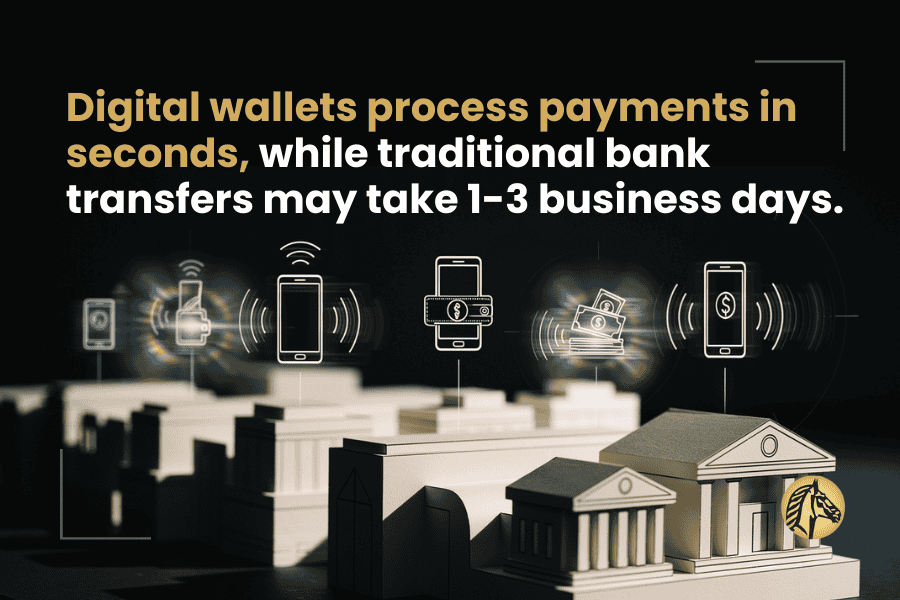
Expense tracking is a common feature in both environments. Digital wallets often provide real-time spending insights, while bank accounts offer structured statements and transaction histories.
Checking accounts support formal financial visibility, while digital wallets emphasize immediate insights into daily spending.
Earning Interest and Savings Structures
Savings accounts within traditional banking allow customers to earn interest on deposits, supporting longer-term planning and capital preservation. Digital wallets generally do not offer interest, as they are designed for spending and quick access rather than saving.
This distinction reinforces the complementary role of savings accounts in helping your money grow over time.
Checking Accounts and Transactional Banking
Checking accounts support frequent activity such as bill payments, debit card spending, and fund transfers. They allow users to transfer funds, manage expenses, and support recurring obligations.
Digital wallets often rely on these accounts as a funding source, reinforcing their interconnected roles.
Digital Wallet vs Bank Account in Practice
In practice, individuals and businesses often use both tools. In 2026, modern payment experiences increasingly rely on digital wallets for speed and convenience, while bank accounts continue to provide governance, liquidity, and regulatory alignment. This digital wallet vs bank account balance supports operational flexibility without compromising oversight.
Maximizing Financial Options Through Combined Use
Using both tools allows users to optimize payment efficiency while maintaining structure. Digital wallets simplify daily spending, while bank accounts anchor financial relationships within regulated systems.
Most digital wallets platforms increasingly integrate wallet activity with account oversight, supporting informed decision-making without providing specific advice.
Bank Accounts and Digital Wallets Together
Within Suisse Bank, digital wallets and bank accounts are assessed as interconnected components of financial infrastructure that support how money is stored, moved, and accessed. This assessment takes place within a regulated service environment that includes structured client support, such as around-the-clock assistance and access to a personal account manager, to help ensure operational continuity and clear communication.
Digital wallets facilitate payment execution and transactional efficiency, often through mobile banking environments, while bank accounts provide the governance, regulatory alignment, liquidity access, and oversight required within regulated financial systems, including clarity around account terms and fine print.
Responsibility for selecting and using these tools remains with the client. When their respective roles are clearly defined and managed within appropriate controls, digital wallets and bank accounts can function together to support resilient financial activity aligned with institutional standards and regulatory expectations.