
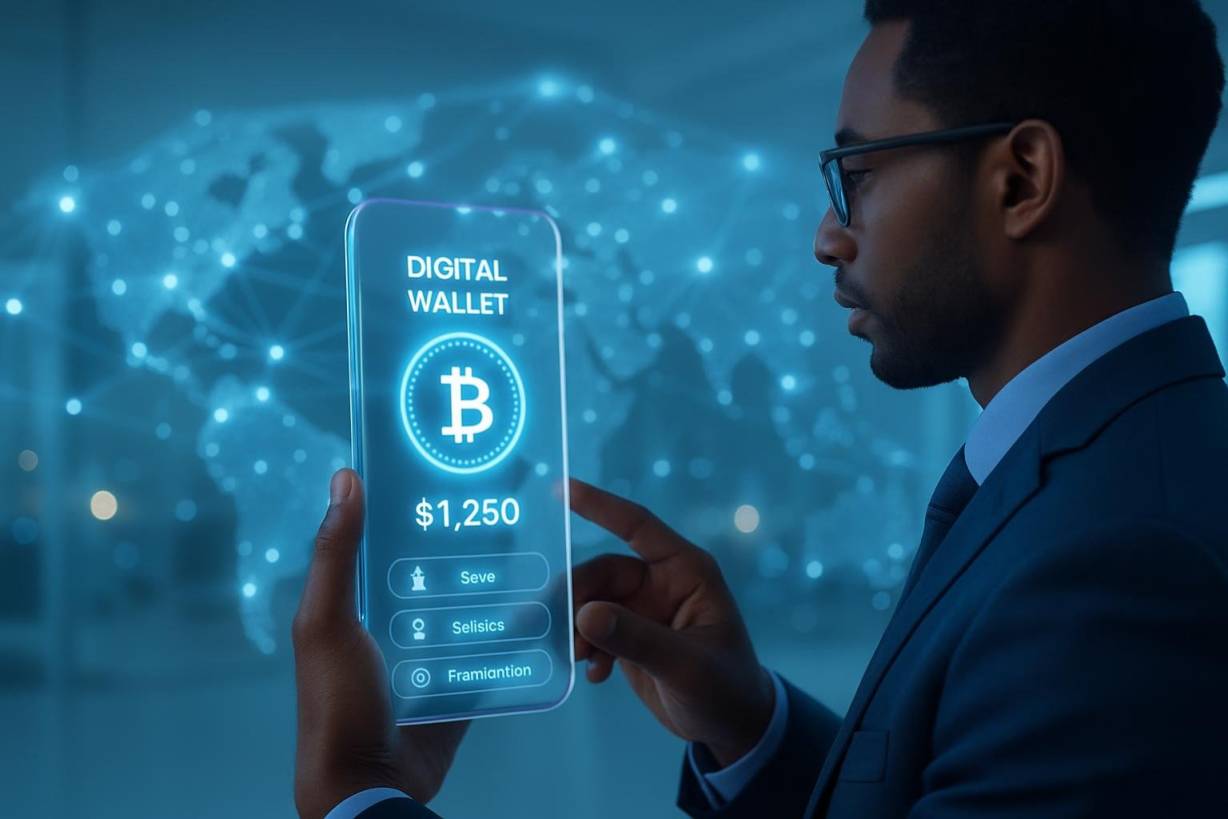
Your physical wallet may soon become a thing of the past. The shift from cash to digital payment methods is accelerating, with digital wallets rapidly replacing cash in many markets. Digital wallets are evolving beyond simple payment tools into comprehensive financial platforms that will account for 65% of global e-commerce transactions and 45% of point-of-sale transactions by 2030, reflecting the growth of digital payments and the decline of physical cards. These mobile apps now handle everything from storing your driver’s license to managing investments and loans, and the rise of alternative payment methods alongside digital wallets is reshaping the payments landscape. Digital wallets are projected to reach nearly $25 trillion in transaction volume by 2027, underscoring their growing dominance in the financial ecosystem.
The transformation happening right now goes far beyond tapping your phone to pay for coffee. Consumer demand for greater convenience and security is driving the rapid evolution of digital wallets and digital payments. Digital wallets are becoming super apps that combine banking, identity verification, and artificial intelligence to create personalized financial experiences. With over 5.2 billion people expected to use digital wallets by 2026, understanding these changes will determine how you manage money, prove your identity, and interact with financial services in the coming years. According to a study by ABI Research, 80% of respondents reported using a smartphone or smartwatch to make their payments, highlighting the growing reliance on mobile devices for financial transactions. In the UK, a quarter of adults used a digital wallet in 2022, up from just 14% in 2017, showcasing the rapid adoption of this technology.
Core Innovations and the Expanding Role of Digital Wallets
Digital wallets have transformed from simple payment tools into sophisticated financial ecosystems that integrate blockchain technology, artificial intelligence, and advanced biometric security. Seamless integration with existing payment infrastructure is crucial, as it supports digital wallet transactions across platforms like Apple Pay, Alipay, and Google Pay. These platforms demonstrate how tokenization and AI-driven features are reshaping how you manage money, verify identity, and access financial services, driven by the widespread adoption of digital wallets and ongoing efforts to enhance security.
There is also a growing trend toward a single app that consolidates multiple financial services, which significantly improves customer experience and customer satisfaction.
Evolution From Payment Tools to Comprehensive Financial Platforms
Digital wallets no longer just store your payment information. They’ve become super apps that handle multiple financial services in one place.
WeChat and Alipay lead this transformation in Asia. These platforms let you pay bills, transfer money, buy insurance, and access loans. In Africa, M-Pesa provides banking services to millions who lack traditional bank accounts.
Key features of modern financial platforms include:
- Peer-to-peer transfers
- Bill payments and utilities
- Investment and savings accounts
- Insurance products
- Credit and lending services
- Loyalty programs integration
- Budgeting tools
- The ability to store and manage multiple cards, including credit and debit cards
- 'Buy Now, Pay Later' (BNPL) options, which are increasingly integrated into digital wallets to provide flexible payment solutions.
PayPal and Google Wallet now offer similar expanded services. You can split bills with friends, track spending, and earn rewards on purchases. These platforms are user friendly, making them especially appealing to younger demographics and younger generations who are driving the adoption of digital wallets. Grab in Southeast Asia combines ride-hailing with financial services, showing how mobile wallets can anchor entire digital ecosystems. Mobile wallets are enabling fast, tap to pay transactions and faster checkouts in both online and in-store environments. The global digital wallet user base is expected to exceed 5.3 billion by 2026, representing more than half the world's population. In 2021, consumers made $91.7 billion in physical Apple Pay purchases, up 96% from $46.9 billion in 2019, highlighting the growing role of digital wallets in everyday transactions.
Open banking regulations help these platforms connect with traditional banks. This lets you view all your accounts in one app and move money between different financial institutions seamlessly.
Integration With Digital Currencies and Blockchain Technology
Blockchain technology is transforming how digital wallets handle transactions and store value. You can now use these platforms to manage both traditional money and digital assets.
Tokenization has become a core security feature. When you make a payment, your real card details get replaced with unique tokens. This means your actual payment information never travels through the payment ecosystem, reducing risks from data breaches. Digital wallets protect sensitive data during digital wallet payments and digital wallet transactions by using encryption, secure hardware, and advanced fraud detection to safeguard personal and payment information. Additionally, many digital wallets now employ dynamic CVVs, which change after every transaction, further enhancing security and reducing the risk of fraud.
Many wallets now support cryptocurrency payments. PayPal lets you buy, sell, and spend Bitcoin directly from your account. Traditional fintech companies are adding crypto features to compete with dedicated blockchain wallets.
Central Bank Digital Currencies (CBDCs) represent the next major shift. These government-issued digital currencies will integrate directly into existing wallet platforms. China’s digital yuan already works through Alipay and WeChat.
Smart contracts on blockchain networks enable programmable payments. Your wallet could automatically pay rent, split utility bills, or transfer savings based on preset rules. This automation reduces the need for manual financial management. The next generation of digital wallets will leverage near field communication and NFC enabled payment terminals to support secure, automated transactions.
AI, Identity Verification, and Biometric Security in Digital Wallets
Artificial intelligence now powers many essential wallet functions. AI algorithms analyze your spending patterns to detect unusual transactions and prevent fraud before it happens.
Biometric security has replaced traditional passwords in most major platforms. You unlock Apple Pay with Face ID or fingerprint scans, such as Touch ID, which are standard authentication methods in digital wallets. Google Pay uses voice recognition and behavioral patterns to verify your identity. Facial recognition is also becoming a standard component in digital wallets, further enhancing security and user authentication. Tokenization is a security measure used in digital wallets to protect sensitive card data by replacing it with a randomly generated substitute, adding another layer of protection. The FIDO (Fast Identity Online) alliance has developed standards to enhance security using biometrics and cryptography, ensuring even greater protection for users. Security will become more robust, moving beyond passwords and pins to advanced methods, ensuring a safer user experience.
Machine learning improves identity verification processes. When you sign up for new financial services, AI systems can verify documents and check your identity in seconds instead of days.
Enhanced security features include:
- Real-time fraud detection
- Behavioral biometrics
- Multi-factor authentication
- Two factor authentication
- Encrypted data storage
- Risk scoring algorithms
AI also personalizes your experience. Digital wallets learn your spending habits and suggest relevant offers, budgeting tips, and financial products. You use your mobile device to access digital wallets, which are designed to protect sensitive data and make these platforms more valuable for daily use beyond just making payments. In the future, digital wallets are likely to integrate with AI agents capable of performing actions such as booking travel or making purchases, further enhancing their utility and convenience.
Advanced encryption protects your data both when stored and during transactions. Even if cyberattacks succeed, the stolen information remains unreadable without proper decryption keys.

Digital Wallets and the Future of Global Payments
Digital wallets are transforming how money moves across borders and reaches unbanked populations worldwide. Digital wallet adoption is accelerating, with rising adoption rates among customers and consumers driving further adoption as more people experience the benefits of these technologies. They’re integrating with central bank digital currencies and blockchain technology while expanding beyond simple payments to become comprehensive financial platforms, emerging as the preferred payment method and playing a crucial role in the future of payments. The e-commerce boom during the global pandemic spurred further adoption of digital wallets, particularly among older consumers.
Cross-Border Transactions and Financial Inclusion
Digital wallets are breaking down barriers in cross-border payments. Traditional international transfers often take days and cost high fees. Digital wallets can process these transactions in minutes at lower costs.
Key improvements include:
- Real-time settlement across different currencies
- Reduced fees from 5-10% to under 2%
- 24/7 availability without bank hours restrictions
Financial inclusion represents the biggest opportunity. Over 1.7 billion adults worldwide lack access to basic banking services. Digital wallets provide these populations with their first entry point into the financial ecosystem. By using digital wallets, users can gain access to financial services, store payment information securely, and use debit cards and credit cards for seamless transactions.
In Africa and Latin America, mobile-first solutions are reaching rural areas where traditional banks never established branches. With mobile devices and mobile wallets, people can complete transactions both online and in store. You can now send money to family members across continents using just a smartphone.
The COVID-19 pandemic accelerated this shift. Governments used digital wallets to distribute emergency payments directly to citizens’ phones. This proved digital wallets could serve as critical financial infrastructure during crises. During the pandemic, digital wallet adoption accelerated as demand for contactless payments increased, highlighting their role in ensuring safe and efficient transactions.
Central Bank Digital Currencies and Cryptocurrencies
Central Bank Digital Currencies (CBDCs) are reshaping digital wallet capabilities. The European Central Bank and other institutions are developing digital versions of their national currencies.
Digital wallets will become the primary interface for CBDCs. You’ll store and spend digital euros or dollars through your wallet app. This integration combines government-backed stability with digital convenience. Among major digital wallets, Samsung Pay and Apple Wallet are leading options, each holding significant market share in the U.S. and globally.
Cryptocurrency support is expanding rapidly. Major digital wallets now handle Bitcoin, Ethereum, and other digital assets alongside traditional currencies. Most digital wallets support credit card payments and are part of broader digital solutions that enhance payment flexibility and security. Smart contracts enable automated payments and complex financial agreements.
Blockchain technology provides the security foundation. Each transaction creates a permanent, tamper-proof record. This builds trust while maintaining user privacy through encryption.
DeFi (Decentralized Finance) protocols are integrating with wallet platforms. You can earn interest, trade currencies, and access loans without traditional banks. This creates new revenue streams for both users and wallet providers. A robust payment infrastructure is essential to support digital wallet payments and ensure seamless integration with DeFi and blockchain technologies.
Changing User Behavior and the Drive Beyond Payments
Your expectations for digital wallets extend far beyond simple payments. Modern wallets are becoming super apps that handle multiple aspects of daily life.
Expanded services include:
- Investment and savings accounts
- Insurance products and claims
- Loyalty programs and rewards
- Identity verification and document storage
Digital wallet payments are now widely adopted by both younger and older consumers, reflecting the growing appeal across all age groups. Most consumers value the immediate use these wallets provide, along with enhanced customer satisfaction through convenience, security, and rewards. Enhancements in speed and convenience are expected with the growth of contactless payment options, further solidifying their role in everyday transactions.
Security measures continue advancing with biometric authentication and AI fraud detection. Your fingerprint or face scan provides access while algorithms monitor for suspicious activity in real-time.
The shift toward embedded finance means you’ll encounter payment options within social media, shopping apps, and gaming platforms. As physical cards decline, digital wallets are increasingly used for seamless checkout experiences, even at networking events where digital business cards replace traditional printed ones.
Value creation now focuses on personalization. Wallets analyze your spending patterns to offer customized financial products and budgeting insights. This transforms them from payment tools into comprehensive financial transactions managers.
User behavior shows preference for integrated experiences. Rather than switching between multiple financial apps, you want one platform that handles everything from daily purchases to long-term investments. The rise of digital wallets is not just a trend, but a fundamental shift expected to continue for the foreseeable future. Digital wallets will consolidate various services such as loyalty programs, transit passes, and identity credentials, making them indispensable tools for modern financial management.

The Future of Digital Wallets: Transforming Global Finance by 2026
The future of digital wallets extends far beyond simple payment processing, evolving into comprehensive financial super apps that will revolutionize how we manage money, verify identity, and conduct business globally. With over 5.2 billion people expected to use digital wallets by 2026, these platforms are integrating blockchain technology, artificial intelligence, and biometric security to create seamless financial ecosystems. Digital wallets are projected to handle 65% of global e-commerce transactions and reach nearly $25 trillion in transaction volume by 2027, fundamentally transforming the payments landscape.
These advanced platforms are breaking down barriers in cross-border payments, providing financial inclusion to 1.7 billion unbanked adults worldwide, and integrating with Central Bank Digital Currencies and cryptocurrencies. Through AI-powered fraud detection, real-time transaction processing, and automated smart contracts, digital wallets are becoming indispensable tools that combine banking, investments, insurance, and identity verification in one unified platform. As physical cards decline and contactless payments dominate, the future of digital wallets represents a complete transformation of how individuals and businesses interact with financial services globally.
At Suisse Bank, we recognize that the future of digital wallets lies in providing comprehensive, secure, and innovative financial solutions that transcend traditional banking boundaries. Our All-In-One Wallet embodies this vision by combining cutting-edge blockchain technology with traditional banking services, cryptocurrency trading capabilities, and seamless cross-border payment solutions. We've designed our platform to meet the evolving needs of global entrepreneurs who require instant access to multiple financial services through one unified, user-friendly interface.
Our commitment to innovation positions us at the forefront of digital wallet evolution, offering 24/7 multilingual support, advanced security features, and the flexibility to conduct business across multiple jurisdictions without geographical limitations. As the financial landscape continues to evolve toward digital-first solutions, we ensure our clients stay ahead of the curve with access to both traditional and emerging financial technologies.
Become our client and experience the future of digital wallets today through our All-In-One Wallet, designed to make your international business transactions more efficient, secure, and seamlessly integrated into the global digital economy.