


How Long It Takes for International Bank Transfer to Reach Its Destination
When asking how long does it take an international bank transfer, the answer depends on several operational and regulatory factors. On average, international bank transfers take between one and five business days.
The actual timeline is shaped by currency pairs, destination countries, intermediary banks, and compliance requirements.
From the outset, established international banks such as Suisse Bank operate within global payment networks designed to balance speed, security, and regulatory integrity, as reflected in ongoing international banking updates from Suisse Bank, which is critical for reliable cross-border transactions.
Key Factors That Influence Transfer Time
Transfer speed is closely tied to banking infrastructure and regulatory processes. Currency conversion, especially involving less commonly traded currencies, can add processing time. Transfers may also pass through correspondent banks, each performing verification steps.
Compliance checks related to anti-money laundering and know-your-customer regulations are mandatory and non-negotiable, reflecting broader financial considerations when managing cross-border funds.
Suisse Bank’s structured framework supports smooth processing by reducing friction during these checks, helping transactions move forward without compromising required standards.
The Role of Banking Infrastructure in Cross-Border Payments

A strong global banking infrastructure is one of the most important determinants of transfer efficiency. Banks with extensive correspondent networks and experience in cross-border settlements are better positioned to manage international flows.
Suisse Bank’s established presence in international banking corridors and its alignment with global payment systems support predictable settlement timelines, reflecting practical approaches to handling cross-border transactions.
This capability is especially relevant for clients involved in trade finance, where payment timing often aligns with shipping documents, delivery milestones, and broader global payment and trade finance developments.
Typical International Transfer Timelines
Transfers between major financial centers and widely used currencies may be completed within one to two business days, while payments involving emerging markets can take longer.
Factors such as local banking holidays, cutoff times, and additional reviews may extend timelines. Working with a bank that emphasizes operational consistency and transparency helps set realistic expectations.
Suisse Bank’s approach supports informed planning by aligning transfer processes with broader international banking and structured methods for supporting cross-border commerce.
Planning International Transfers More Effectively
To reduce delays, senders should ensure accurate beneficiary information, initiate transfers before daily cutoff times, and work with banks that have strong international capabilities, in line with global best practices for international payments.
When evaluating how long an international bank transfers, the reliability of the banking partner matters as much as speed.
Suisse Bank’s focus on infrastructure, compliance, and cross-border expertise supports dependable international transfers while reinforcing trust and long-term financial stability.
The Importance of Risk Management and Settlement Controls
Beyond transfer speed, settlement controls play a critical role in determining how efficiently international payments reach their destination.
Banks must manage counterparty risk, liquidity timing, and settlement finality across jurisdictions, in line with globally recognized frameworks for managing payment risk.
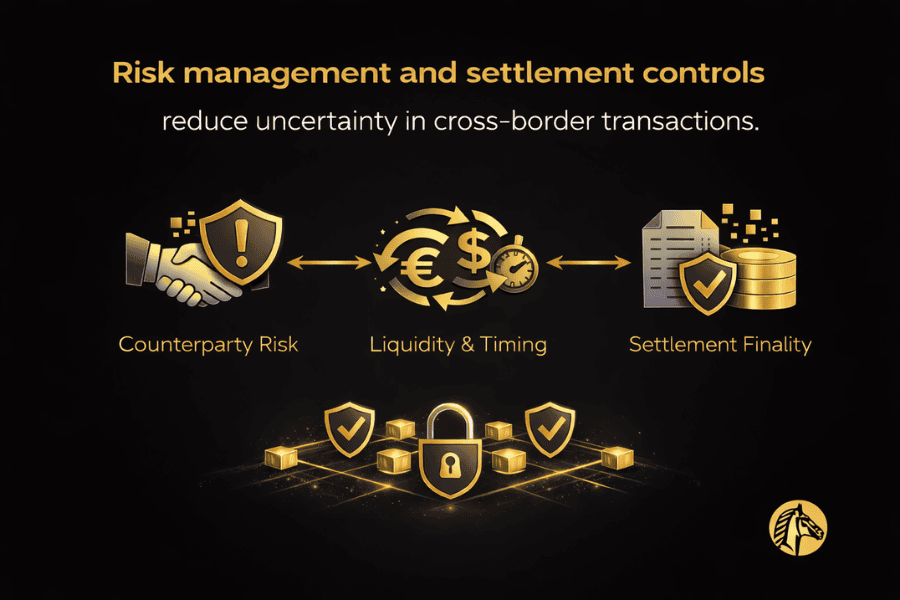
Suisse Bank operates within established international frameworks that prioritize secure settlement processes, helping reduce uncertainty in cross-border transactions. This is particularly relevant for businesses handling high-value or time-sensitive payments, where predictability matters as much as speed.
These practices also align closely with broader discussions around trade finance instruments and cross-border risk mitigation.
How Trade Finance and Payment Flows Intersect
International bank transfers are often closely linked to trade finance activities, especially in global supply chains. Payments may be triggered by documentary requirements, shipping confirmations, or contract milestones, all of which are governed by the foundational principles of trade finance.
Banks with experience across both payment processing and trade finance are better equipped to manage these interdependencies.
Suisse Bank’s involvement in cross-border payments and trade-related financial services supports smoother coordination between funding, documentation, and settlement.
For readers exploring this topic further, related content on how cross-border commercial transactions are financed and international payment mechanisms can provide additional context and deepen understanding.
Choosing the Right Partner for International Transfers
Ultimately, understanding how long an international bank transfer takes is only part of the decision-making process. The reliability of the banking partner, the strength of its global infrastructure, and its approach to compliance and risk management all influence the overall experience.
Suisse Bank operates within established international frameworks that support secure, transparent, and well-governed cross-border payments.
For businesses and individuals seeking greater clarity around international banking services, trade finance solutions, and global payment capabilities, learning more about Suisse Bank’s approach can provide valuable context when planning international financial activities.
Practical Takeaway
If you want international transfers to arrive more smoothly, focus on three basics: send accurate beneficiary details, submit payments before cutoff times, and choose a bank with strong international payment infrastructure. These simple steps reduce delays and make transfer timelines far more predictable.